Home › Features › Routine charts for kids
Morning and bedtime routine charts for kids, one step at a time
FridgeBoard turns the iPad on your fridge into a visual routine chart that walks each child through their morning or bedtime routine, one step at a time. Children who can’t read yet see a picture of Max the dog doing each step, and everyone can see how long is left before school or lights out.
Why a routine chart helps (and why the paper one stops)
Mornings go wrong in the same places in most houses: shoes, teeth, the lunchbox still on the bench. A routine chart takes the parent out of the middle. Instead of “have you brushed your teeth?” for the fourth time, the chart says what’s next, and the child does it.
Paper charts and laminated cards with Velcro work for a while. But they don’t know what time it is, they can’t tell a child they’re running behind, and the bits go missing. A routine on the shared screen shows one step at a time, keeps the time for you, and starts by itself at the right time each day.
How a routine works on the shared screen
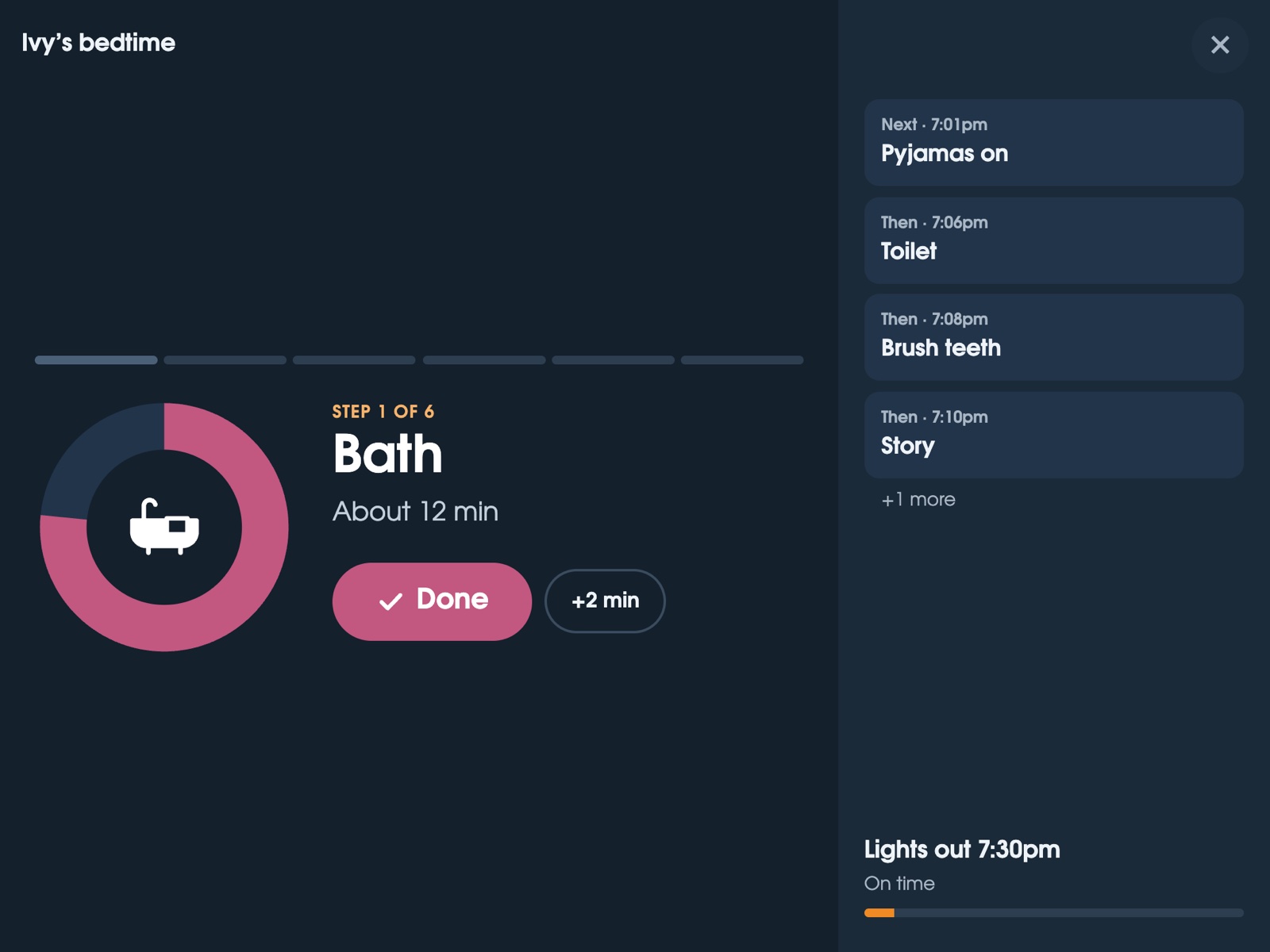
- One step at a time. At its time, the routine opens full screen with the first step big in the middle: Bath, about 12 minutes. The child taps Done, and the next step comes up. If a step needs longer, +2 min gives them a little more.
- A finish goal they can read. Set the time it has to be done by, and the routine works out when to start. The screen says it the way a child would: “Finish goal: 8:00am. Running behind by 3 min.” Or set a start time instead.
- Any routine you need. Morning, after school, bedtime, swimming bag, getting ready for sport. Steps can be different on different days, such as library bag on Tuesdays.
- On their card. The routine also sits on each child’s card on Home, with a Start button, so it can be done early too.
- Coins if you like. Finishing a routine can earn coins towards the rewards shop.
- Holidays. Pause routines while the family is away, so nothing shows as missed.
A picture routine for kids who can’t read yet
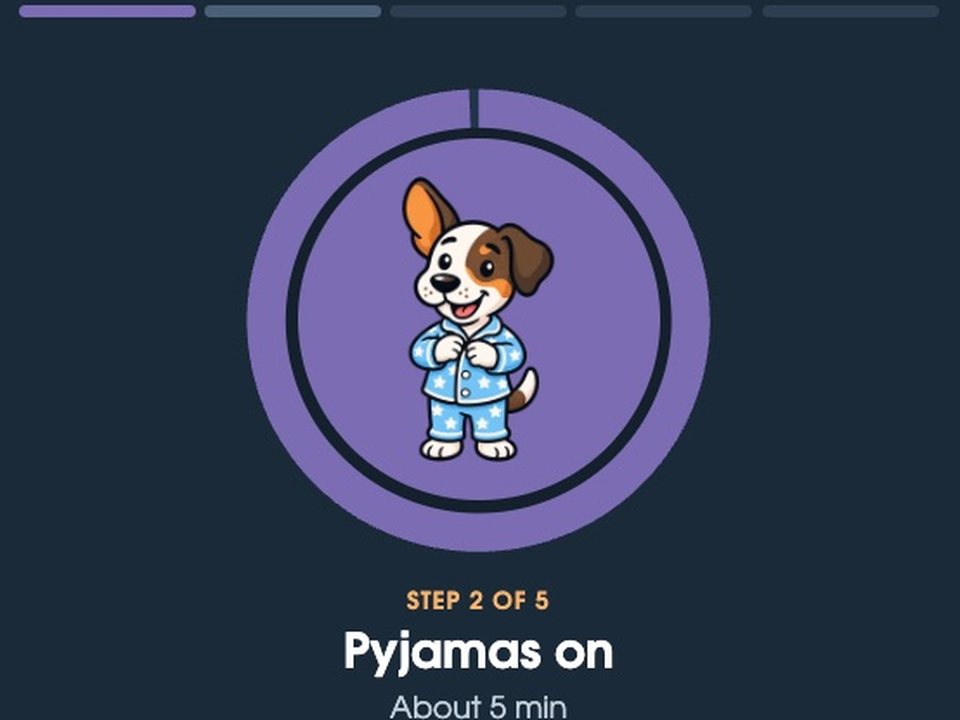
A toddler or a preschooler can’t use a list of words. For children who can’t read yet, each step shows a cartoon of Max the dog doing it: Max brushing his teeth, Max putting his pyjamas on, Max waiting for the bathroom. The step can be read aloud, too. It makes a routine chart for toddlers and preschoolers that they can follow on their own, and older children can have the pictures as well if they like them.
Two children, one bathroom
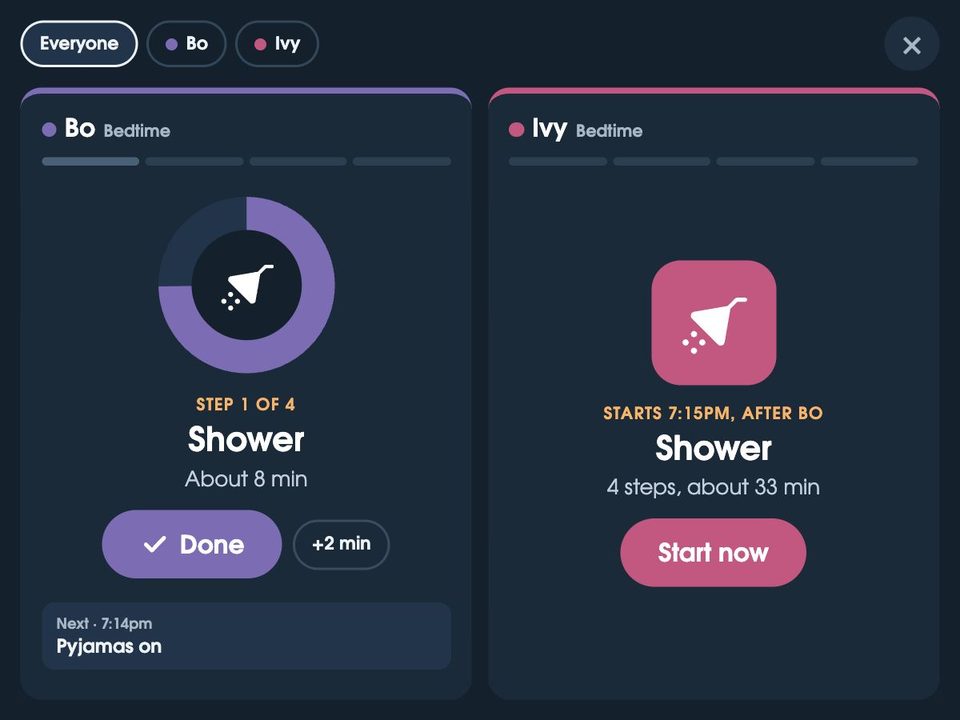
When two children are on the same bedtime routine, they end up in the bathroom at the same moment. Children on the same routine can start a few minutes apart, so Ivy starts at 7:15pm, after Bo, and nobody waits outside the door. Each child gets their own side of the screen with their own steps. Siblings can also do a routine together, with one set of ticks, when that suits better.
Tips for a morning or bedtime routine that sticks
- Keep it short. Four to six steps is plenty for most children. A toddler might start with three: pyjamas, teeth, story.
- Put the steps in the order they really happen. Walk through it with your child once and write down what they actually do.
- Make the boring steps small. “Get ready” is too big. “Shoes on” is a step a child can finish.
- Give each step a rough time. Most children don’t know that getting dressed takes 5 minutes, not 20. Seeing it helps.
- Same time, every day. A routine is easier when it starts at the same time, school days and weekends a little apart if you need.
- Finish with something good. A story at the end of bedtime, or five minutes of play before school if everyone’s ready.
Our bedtime routine guide has a step-by-step plan for each age, and chores by age helps when routines grow into jobs.
ADHD-friendly visual routines and visual schedules
Visual, step-by-step routines are a common way to help children who find transitions hard, including many with ADHD or autism. The routine player shows only the step in front of them, with a picture, a rough time and a clear finish. It says plainly when they’re running behind, so a parent doesn’t have to, and steps can be read aloud. FridgeBoard isn’t a medical or therapy tool. It’s a visual schedule on the fridge that can sit alongside whatever already works for your child.
Setting it up
- On your phone, go to fridgeboard.me and tap Try it free. Add who lives at home.
- Add a routine: who it’s for, the steps with rough minutes, and a finish goal or a start time. Choose Max pictures for children who can’t read yet.
- On the iPad, open Safari, go to fridgeboard.me, tap Open, then Use this as the shared screen. Scan the code with your phone.
- Put the iPad where the routine happens: the kitchen, or by the bathroom or bedrooms if you have a second screen.
Three shared screens are included. It runs on any iPad from the iPad 2 on, Android tablets and computers. Turning an old iPad into a family screen.
Questions
Is there a visual routine chart app for kids?
Yes. FridgeBoard shows each child’s morning, after-school or bedtime routine on an iPad or tablet on the fridge, one step at a time, with a finish goal and how much time is left. Parents set it up from their phone.
Does it work for toddlers and kids who can’t read yet?
Yes. For children who can’t read yet, each step shows a picture of Max the dog doing it, and steps can be read aloud, so a young child can follow the routine on their own.
Can two kids do their bedtime routine at the same time?
Yes. Each child gets their own side of the screen, and children on the same routine can start a few minutes apart so nobody waits for the bathroom. Siblings can also share one routine together.
Is it good for kids with ADHD?
Visual, step-by-step routines are a common way to help. FridgeBoard shows one step at a time with a picture and a clear finish, but it isn’t a medical or therapy tool.
Can the routine show what time it has to be finished by?
Yes. Set a finish goal, such as 8:00am for school, and the screen shows it, saying “On time” or “Running behind by 3 min”. You can set a start time instead if you prefer.
How much does it cost?
FridgeBoard is one payment for the whole household (US$24 plus tax in the US, A$39 in Australia), with no subscription. Routines, the chore chart, calendar and lists are all included, with a 5-day free trial and no card needed.